01
Shahada
Bearing witness to the oneness of God and Muhammad's role as God's messenger.
An educational overview of five practices widely regarded as central to Muslim religious life: testimony of faith, prayer, fasting, almsgiving and pilgrimage.
 Practice, intention
Names, interpretations and details vary among Muslim communities, but these practices provide a widely recognized framework for devotion and communal life.
Bearing witness to the oneness of God and Muhammad's role as God's messenger.
Formal prayer at appointed times, oriented toward Mecca.
Fasting during Ramadan as an exercise in devotion and self-discipline.
Obligatory almsgiving intended to support people and communities in need.
Pilgrimage to Mecca once in a lifetime when health and means permit.
The practices commonly called the Five Pillars organize important parts of Sunni Muslim life. Comparable duties are also central in Shi'a traditions, although they may be categorized and explained differently. Observance is shaped by religious school, community, health, age and circumstance.
Intention—often described by the Arabic term niyyah—is important in Islamic ritual. A practice is not understood only as an outward action; the worshipper consciously undertakes it as an act of devotion. Islamic jurisprudence also discusses exemptions and accommodations for illness, travel, pregnancy, disability and other circumstances.
Shahada means testimony or bearing witness. It affirms that there is no deity except God and that Muhammad is God's messenger. The declaration joins two central Islamic convictions: uncompromising monotheism and acceptance of Muhammad's prophetic mission.
The testimony is intended as a conscious affirmation rather than an empty formula. It is heard throughout Muslim life, including worship and personal milestones, and its sincere declaration is associated with entering Islam.
Salat is prescribed ritual prayer. Sunni Muslims and Twelver Shi'a Muslims generally observe five daily prayer times, though Twelver practice may combine them into three periods. The prayers are associated with dawn, midday, afternoon, sunset and night rather than with worship of the sun.
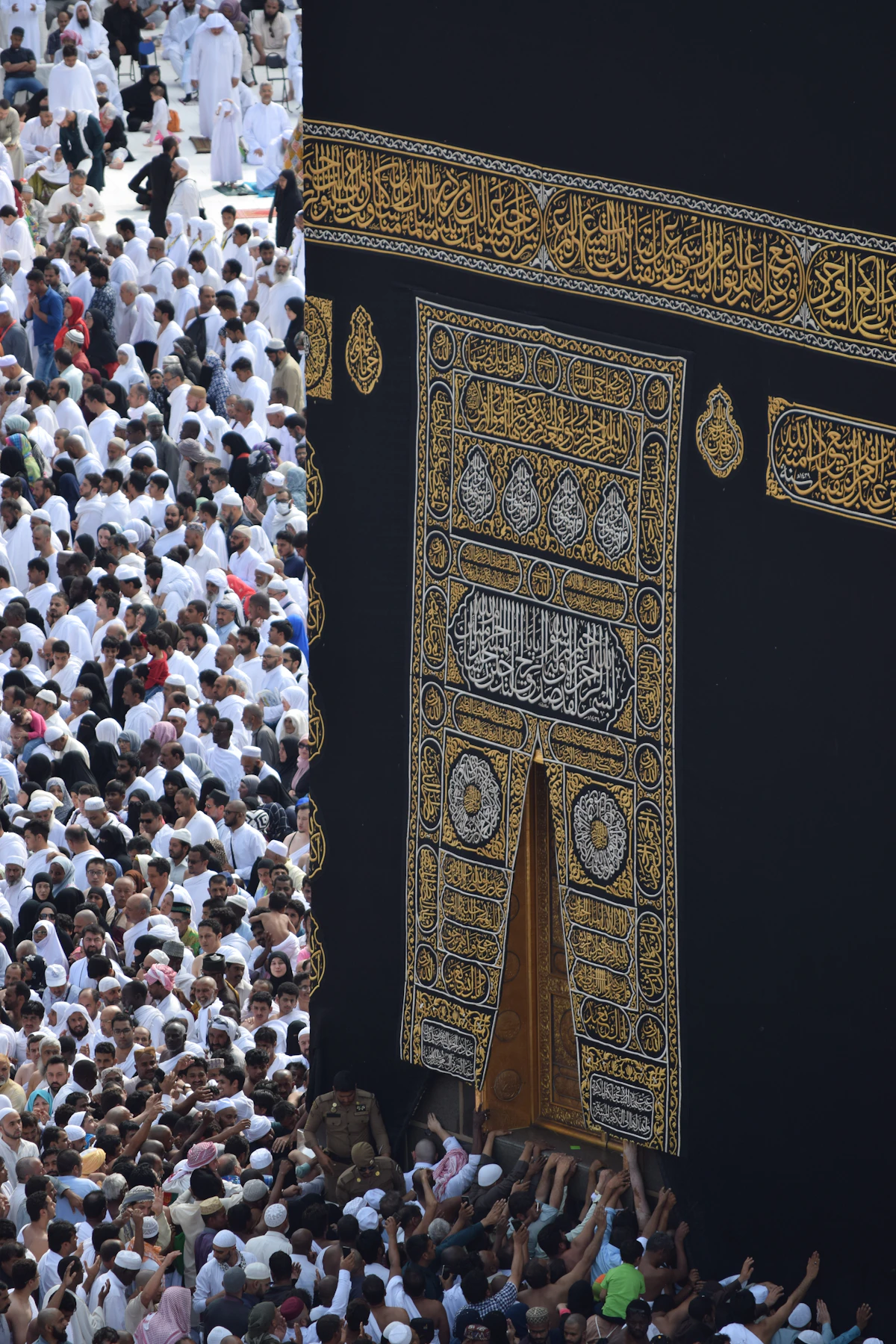
Prayer may be performed alone or with others in any suitable, clean place. Congregational prayer is valued for its communal dimension, while Friday midday worship has particular significance. Worshippers face the Kaaba in Mecca, a direction known as the qibla.
Before prayer, a worshipper ordinarily performs wudu, a prescribed washing of the hands, face, arms and feet. When water is unavailable or its use would cause harm, Islamic law provides an alternative form of purification called tayammum.
Salat follows an ordered sequence of standing, bowing, prostrating and sitting, accompanied by passages from the Qur'an and set phrases in Arabic. Personal requests to God may be made separately in a less formal form of prayer called du'a.
During Ramadan, the ninth month of the Islamic lunar calendar, adult Muslims who are able to fast abstain from food and drink from dawn until sunset. The practice also calls for ethical restraint, reflection, worship and care in one's treatment of others.
Families and communities often share a meal before dawn and another after sunset. Many break the fast with water and dates. Because the Islamic calendar is lunar, Ramadan moves through the seasons, and daily fasting hours vary by place and year.
Children are not ordinarily obligated to complete the fast, though some participate gradually. Exemptions or alternatives may apply to people who are ill, travelling, pregnant, nursing, elderly or otherwise unable to fast safely. Details differ among schools of Islamic law, and individuals often seek guidance appropriate to their circumstances.
Zakat is obligatory almsgiving on qualifying wealth. It is distinct from voluntary charity, known as sadaqah. In common Sunni practice, a rate of 2.5 percent applies to certain assets held above a minimum threshold for a lunar year; other assets and traditions may be calculated differently.
The Qur'an identifies categories of eligible recipients, including people experiencing poverty and hardship. Collection may be organized through institutions, governments or direct individual giving, depending on the country and community. Because calculations can be complex, religious authorities provide guidance about income, savings, business assets and agricultural produce.
Hajj is the pilgrimage to Mecca during specified days of Dhu al-Hijjah, the final month of the Islamic calendar. It is expected once in a lifetime of Muslims who are physically and financially able to undertake it. A pilgrimage made at another time is called umrah; it is valued but does not replace Hajj.
Pilgrims enter a consecrated state called ihram, which includes simple clothing and rules intended to emphasize restraint and equality. Major rites include circling the Kaaba, travelling between Safa and Marwa, gathering at Arafat and completing further observances at Mina.
The movement between Safa and Marwa recalls Hagar's search for water for Ishmael in Islamic tradition. The gathering at Arafat is a central moment of prayer and reflection. The pilgrimage concludes alongside Eid al-Adha observances, which commemorate Abraham's willingness to obey God and God's provision of an animal in place of his son.
Modern transportation has changed the journey, but Hajj remains physically demanding and requires preparation. Capacity, health and travel rules can affect participation, while the duty itself remains conditional on a person's ability.
No. The familiar list of five is especially associated with Sunni teaching. Shi'a traditions affirm many of the same practices but may organize religious duties under different headings.
Obligations depend on capacity and circumstance. Islamic law recognizes exemptions and accommodations related to health, age, travel, finances and other conditions.
Salat is the formal, structured ritual prayer. Muslims may also make personal supplications, commonly called du'a, at many times.
The Ramadan fast is observed each day from dawn until sunset. Eating and drinking resume at night, and exemptions apply when fasting would be unsafe or is otherwise excused.
No. Zakat is an obligation on qualifying wealth, while sadaqah is voluntary giving. Calculation and distribution practices vary.
No. Umrah may be undertaken at other times and is religiously meaningful, but it does not fulfill the Hajj obligation for a person who is able to perform Hajj.